Optical filters are optical components that selectively transmit or block certain wavelength ranges of light, enabling precise control of the spectrum. They can be classified as follows:
1. By Transmission Band
Shortpass Filters
Transmit light below a cut-off wavelength and block higher wavelengths.
Longpass Filters
Transmit light above a cut-off wavelength and block lower wavelengths.
Bandpass Filters
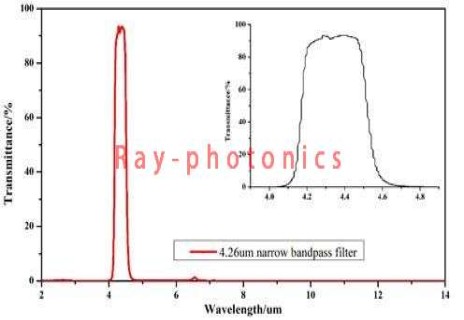
Transmit a specific narrow wavelength range while blocking all others, commonly used in spectroscopy and bio-imaging.
Bandstop (Notch) Filters
Block a narrow wavelength range and transmit the rest, often used for laser suppression.
2. By Function
Neutral Density (ND) Filters
Attenuate light intensity evenly over a wide spectral range without changing its spectral distribution.
Dichroic (Color) Filters
Separate different colors or wavelength ranges by reflection and transmission.
Fluorescence Filters
Include excitation filters, emission filters, and dichroic beam splitters, widely applied in fluorescence microscopy.
Polarizing Filters
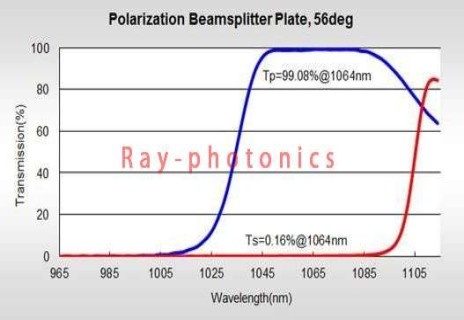
Transmit light of a specific polarization state, such as linear or circular polarization.
3. By Material
Colored Glass Filters
Made by doping ions into glass to absorb specific wavelengths; economical but with limited precision.
Interference Filters (Thin-Film Filters)
Constructed from multilayer dielectric coatings, providing high transmission and precise wavelength control.
Summary: Optical filters can be classified by wavelength range, functional purpose, and material type. They are widely used in laser systems, spectroscopy, imaging, life sciences, medical devices, and industrial inspection.